Finding the right addiction treatment can feel overwhelming. When you search for inpatient drug rehab centers near me, you may find dozens of facilities offering different programs, prices, and treatment approaches.
The difficult part isn’t finding a rehab center. It’s finding a facility that provides appropriate professional care, a safe environment, evidence-based treatment, and ongoing recovery support.
This guide explains what inpatient rehab involves, what to look for, how much treatment may cost, how insurance works, and the questions you should ask before choosing a facility.
What Is Inpatient Drug Rehab?
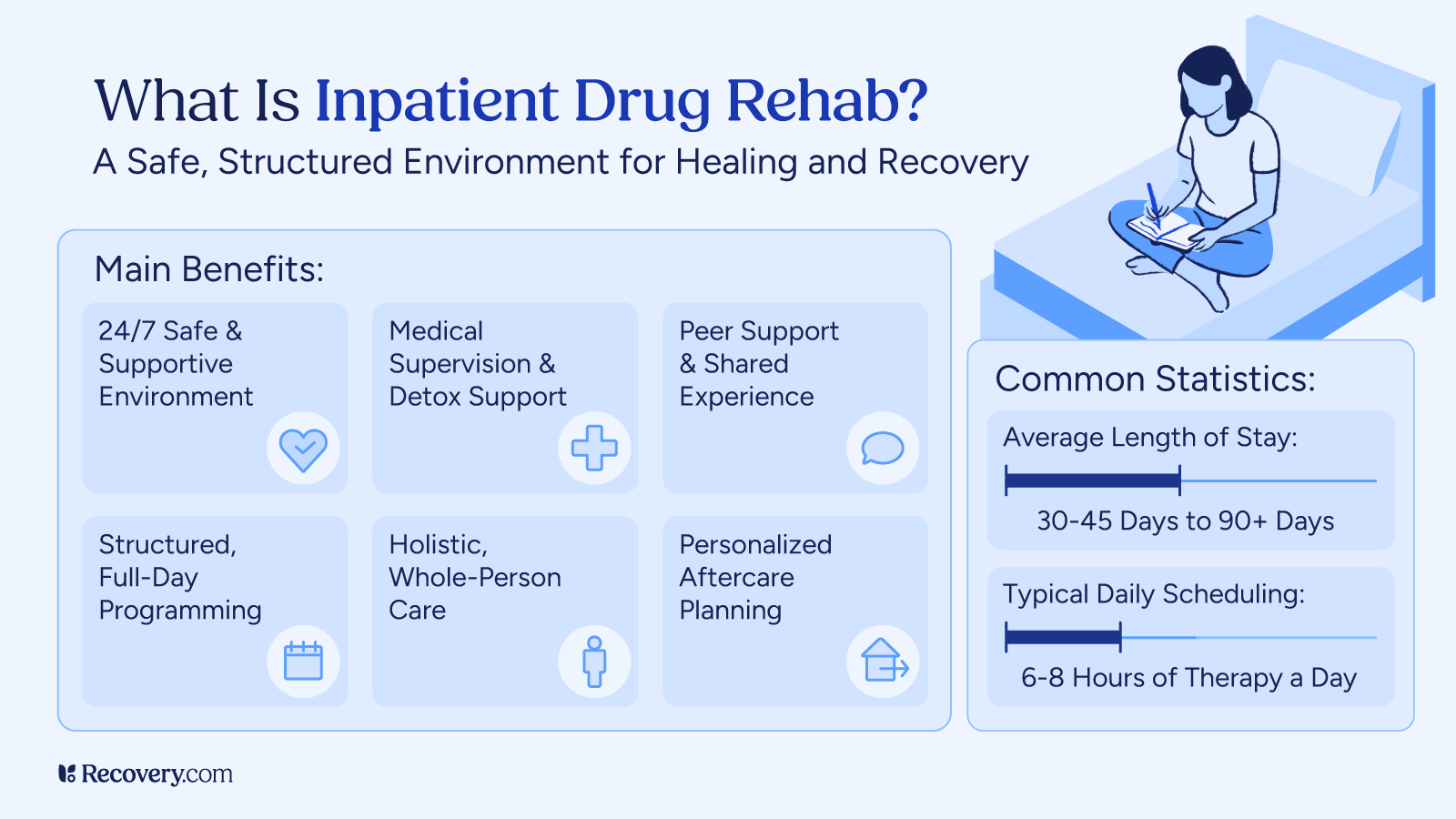
Inpatient drug rehab is a structured treatment program where a person stays at a treatment facility while receiving professional support. Instead of attending appointments and returning home, patients live in an environment designed around recovery.
Residential treatment can provide structure throughout the day. Depending on the program, patients may participate in individual therapy, group counseling, educational sessions, medical care, and other recovery activities.
The length of treatment varies. Some programs last several weeks, while others may continue longer depending on individual needs and clinical recommendations.
Who Can Benefit From Inpatient Addiction Treatment?
Inpatient treatment isn’t necessary for everyone experiencing substance use problems. However, it may be considered when someone needs intensive support or has struggled to make progress with less intensive treatment.
Residential care may also be appropriate when repeated relapse, an unstable home environment, or significant safety concerns make outpatient treatment difficult.
A professional assessment should determine the appropriate level of care. Treatment works best when it is matched to the person’s health, substance use history, mental health, and recovery needs.
Why Choose an Inpatient Drug Rehab Center?
One of the biggest advantages of residential treatment is structure. Patients can follow a planned routine that reduces distractions and allows them to focus on recovery.
Living at a treatment facility can also create distance from environments, people, or situations associated with substance use. Instead of managing recovery alone, patients have access to a treatment team and a structured support system.
This doesn’t guarantee recovery, but it can provide a stable environment for people who need a higher level of support.

What Happens at a Residential Drug Rehab Center?
Treatment usually begins with an assessment. Professionals may review substance use history, physical health, medications, mental health, previous treatment, and personal recovery goals.
Based on that information, the treatment team can develop an individualized plan. The program may include counseling, behavioral therapy, group sessions, family support, medical care, and recovery education.
Every facility is different, so it’s important to ask exactly what services are included before admission.
Medical Detox vs. Inpatient Rehab
Detox and rehabilitation are related but different stages of treatment. Medical detox focuses on managing withdrawal and helping a person safely stop using a substance.
Inpatient rehabilitation addresses the broader factors connected with substance use. This may include behavioral patterns, psychological challenges, relationships, coping skills, and relapse prevention.
Some inpatient drug rehab centers near me provide detox and residential treatment at the same location. Others require patients to complete detox separately before entering the residential program.
Always ask the facility about its detox process before making a decision.
What Makes a Good Inpatient Drug Rehab Center?
A quality treatment center should be transparent about its staff, treatment methods, licensing, costs, and services. Don’t judge a facility only by its website, photographs, or advertising claims.
Look for qualified professionals and evidence-based treatment approaches. Accreditation can also provide useful information when comparing facilities.
SAMHSA recommends considering licensing, accreditation, evidence-based practices, treatment effectiveness, and whether a program meets the individual’s specific needs.
Look for Individualized Treatment
Addiction affects people differently, so treatment shouldn’t be identical for everyone. A person’s substance use history, physical health, mental health, family circumstances, and previous treatment can all influence the recovery plan.
Ask whether the facility creates an individualized treatment plan. You should also ask how often the plan is reviewed and whether it can change as the patient’s needs change.
A personalized approach can make treatment more relevant and practical.
Dual Diagnosis and Mental Health Treatment
Substance use problems can occur alongside mental health conditions such as depression, anxiety, or trauma. When both are present, they may require attention as part of the overall treatment plan.
Ask whether the rehab center provides mental health assessments and appropriate professional support. A facility that can address both substance use and mental health needs may provide more comprehensive care for people with co-occurring conditions.

How to Find Inpatient Drug Rehab Centers Near Me
Start by researching licensed treatment providers in your local area. You can also ask a doctor, healthcare professional, or insurance company for recommendations.
For people in the United States, FindTreatment.gov provides an official treatment locator for substance use and mental health services.
Create a shortlist instead of immediately choosing the first facility that appears in search results. Compare treatment services, qualifications, costs, insurance, and aftercare before making your decision.
Questions to Ask Before Choosing a Rehab
Before admission, ask detailed questions about the facility. Find out whether it is licensed and accredited and who provides medical or behavioral healthcare.
Ask whether detox is available, what therapies are offered, whether mental health conditions are treated, and how long programs typically last.
You should also ask what happens after residential treatment. A strong program should have a clear plan for continuing care rather than simply ending services when the residential stay is complete.
How Much Does Inpatient Drug Rehab Cost?
There is no single price for inpatient addiction treatment. Costs can vary based on location, length of stay, accommodation, medical services, medications, therapy, and the type of facility.
Insurance coverage can significantly change what a patient pays. Some facilities also offer payment plans, financial assistance, or other payment options.
When comparing affordable inpatient rehab programs, ask for the complete expected cost. Make sure you understand which services are included and whether additional charges may apply.
Does Insurance Cover Inpatient Rehab?
Some health insurance plans cover substance use disorder treatment, but coverage varies between policies. Before choosing a facility, contact your insurance provider and confirm whether residential treatment is covered.
Ask whether the rehab center is in-network and check your deductible, copayments, coinsurance, authorization requirements, and covered treatment duration.
The treatment center’s admissions team may also be able to help verify your benefits.
Affordable Inpatient Rehab Options
A more expensive facility isn’t automatically a better facility. If treatment costs are a concern, ask about insurance coverage, payment plans, sliding-scale fees, financial assistance, and publicly funded treatment programs.
SAMHSA recommends asking treatment programs about insurance acceptance and affordable payment options when evaluating treatment providers.
Instead of comparing facilities based only on price, compare the services and level of care included in the total cost.
Does Location Matter?
Searching for inpatient drug rehab near me is a practical starting point because a nearby facility can make transportation and family involvement easier.
However, the closest facility isn’t necessarily the right one. A treatment center farther away may provide specialized services that better match the person’s needs.
Consider location, but prioritize treatment quality, professional qualifications, safety, and the services offered.
Can Family Members Participate in Treatment?
Family support can be valuable during recovery. Some residential programs offer family counseling, educational sessions, or structured visitation.
These services can help family members understand addiction and learn healthier ways to support their loved one.
Ask each facility about its family involvement policy. Participation should always respect the patient’s privacy and treatment plan.
What Happens After Inpatient Rehab?
Completing residential treatment is an important milestone, but recovery often requires continued support. A quality rehab center should help develop an aftercare plan before the patient leaves.
Aftercare may include outpatient counseling, recovery support groups, follow-up appointments, medication management when appropriate, or sober living arrangements.
The goal is to make the transition from structured treatment to everyday life as stable as possible.
Inpatient vs. Outpatient Rehab
The main difference is where the person lives during treatment. Inpatient treatment requires staying at the treatment facility, while outpatient treatment generally allows the person to return home after scheduled appointments.
Neither option is automatically better. The right choice depends on medical needs, substance use severity, safety, home environment, previous treatment, and professional recommendations.
A qualified healthcare professional can help determine the appropriate level of care.
Red Flags When Choosing a Rehab Center
Be cautious about facilities that promise guaranteed recovery or make unrealistic claims about treatment success. Addiction recovery is complex, and outcomes can vary significantly between individuals.
You should also be careful if a facility refuses to explain its treatment methods, staff qualifications, licensing, or costs.
A trustworthy treatment center should answer reasonable questions clearly and help you understand whether its program is appropriate.
How to Compare Rehab Centers
Create a simple comparison before making your final decision. Start with licensing, accreditation, and staff qualifications.
Then compare treatment methods, medical support, mental health services, accommodation, costs, insurance coverage, and aftercare.
Finally, consider location and family accessibility. Looking at all of these factors together can help you make a more informed decision rather than choosing a facility based on advertising alone.
Frequently Asked Questions
How do I find inpatient drug rehab centers near me?
Start with reputable treatment directories, healthcare professionals, and your insurance provider. In the United States, FindTreatment.gov is an official treatment locator for substance use and mental health services.
How long does inpatient drug rehab last?
Treatment length varies according to the individual and the program. Residential treatment may last several weeks or longer depending on clinical needs and the treatment plan.
Is inpatient rehab better than outpatient treatment?
Not necessarily. The appropriate level of care depends on the individual’s medical needs, substance use history, safety, home environment, and previous treatment experience.
Does inpatient rehab include detox?
Some facilities provide detox, while others require detox to be completed separately. Always confirm the facility’s detox services before admission.
Does insurance cover residential drug rehab?
Some insurance plans provide coverage for residential substance use treatment. Coverage depends on the policy, facility, services, and authorization requirements.
Conclusion
Finding inpatient drug rehab centers near me is an important decision, and choosing the right facility requires more than simply searching for the closest option.
Compare treatment methods, professional qualifications, licensing, accreditation, medical services, mental health support, costs, insurance coverage, family involvement, and aftercare.
Most importantly, look for a program that understands the individual’s needs and provides an appropriate level of professional support.
The right treatment environment can provide structure, stability, and access to professional care while helping a person build practical skills for continued recovery.
If you or someone you know is struggling with substance use, speaking with a qualified healthcare or addiction-treatment professional is an important first step toward determining what type of support may be appropriate.