Understanding Debt Consolidation With Bad Credit
If you’re searching for the best debt consolidation loans for bad credit, you’re probably dealing with several monthly payments, high interest rates, or credit card balances that seem difficult to reduce. When your credit score is low, finding an affordable loan can feel even harder because lenders may view you as a higher-risk borrower.
The good news is that bad credit does not automatically mean you have no options. Some lenders consider borrowers with low credit scores, limited credit histories, or other financial challenges. However, qualifying for a loan is only the first step. The more important question is whether the loan actually improves your financial situation.
What Is a Debt Consolidation Loan?
A debt consolidation loan is generally a personal loan used to pay off multiple debts. Instead of making separate payments to several credit card companies or other creditors, you use the new loan to replace eligible balances and then make payments on the consolidation loan.
For example, imagine you have three credit cards:
- Card A: $4,000 balance
- Card B: $3,000 balance
- Card C: $2,000 balance
You have $9,000 of credit card debt and three different payment due dates. A consolidation loan could potentially replace those balances with one $9,000 personal loan, subject to the lender’s approval, fees and terms.
The objective is not simply to move debt from one account to another. A successful consolidation strategy should ideally make the debt less expensive, easier to manage, or both.
The Federal Trade Commission and consumer-finance experts generally recommend understanding the costs and terms before taking on a new debt product. Consolidation can simplify payments, but it does not erase what you owe.
Can You Get a Debt Consolidation Loan With Bad Credit?
Yes, some borrowers with bad credit can qualify for debt consolidation loans.
There is no universal definition of “bad credit” across every lender. Some lenders may accept applicants with scores in the 500s, while others require a higher score. Some also consider information beyond the traditional credit score.
For example, current NerdWallet comparisons show lenders with minimum credit-score requirements ranging from no stated minimum to scores around 600 or higher. Upstart is listed with no minimum credit score requirement in its current comparison, while Upgrade lists a 600 minimum and Avant lists 550.
However, a low minimum credit score does not mean every applicant with that score will be approved.
Lenders can also evaluate income, employment, existing debt, payment history, loan amount and other financial information. LendingTree notes that factors such as income, debt and loan size can affect the rate a borrower receives.
This is why searching for the best debt consolidation loans for bad credit should involve more than looking for a lender advertising the lowest possible minimum credit score.
What Credit Score Is Considered Bad for Debt Consolidation?
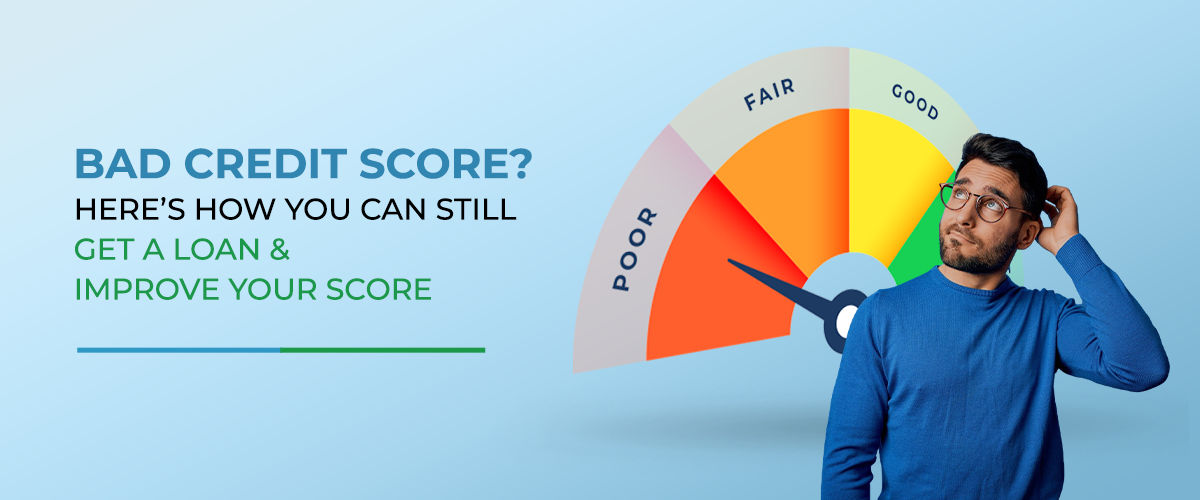
Credit-scoring models differ, but many lenders consider scores below approximately 630 to be poor or bad credit. NerdWallet currently describes borrowers with scores of 629 or lower as having bad credit for the purposes of its debt-consolidation comparison.
Your credit score is important, but it is only one part of your financial profile.
Two borrowers with identical credit scores could receive completely different loan offers because one has stable income and manageable debt while the other has a high debt-to-income ratio and inconsistent income.
For this reason, don’t assume that a specific credit score guarantees a specific APR.
How Debt Consolidation Loans for Bad Credit Work
The process is relatively straightforward.
First, you identify the debts you want to consolidate. These could include credit card balances, certain personal loans, medical bills or other eligible unsecured debt, depending on the lender.
Next, you compare lenders and check whether you can prequalify. Many online lenders allow applicants to see potential rates through a soft credit inquiry, which generally does not affect the credit score. NerdWallet notes that several lenders in its current comparison offer rate checking without a hard credit inquiry.
If you receive an offer, review the APR, origination fee, loan amount, repayment period and estimated monthly payment.
After approval, the loan proceeds may be deposited into your bank account or, with some lenders, sent directly to creditors.
You then repay the consolidation loan according to the agreed schedule.
The biggest mistake is assuming that consolidation itself solves the underlying problem. If you consolidate $10,000 of credit card debt and immediately run those cards back up, you can end up with both the new loan and new credit card balances.
What Types of Debt Can You Consolidate?
The exact eligible debts depend on the lender, but personal loans are commonly used to consolidate unsecured debts.
Potential examples include credit card balances, certain personal loans, medical expenses and other qualifying debts.
Credit card consolidation is particularly common because credit cards can carry high variable interest rates. Replacing several high-interest balances with a fixed-rate personal loan can make repayment more predictable.
However, not every debt should automatically be consolidated.
Secured debts, such as mortgages and many auto loans, work differently because they are backed by collateral. A personal loan may not be the appropriate solution for those obligations.
Before applying, make a complete list of your debts, including the balance, APR, minimum payment and remaining repayment period.
Best Debt Consolidation Loans for Bad Credit in 2026
There is no universal winner, but several lenders currently appear frequently in major 2026 comparisons for borrowers with fair or bad credit.
The following options should be viewed as examples to compare rather than guaranteed recommendations. Loan availability, pricing and eligibility can change, and your actual offer may be very different from advertised rates.
Upstart: Best for Limited or Thin Credit History
Upstart is frequently included among options for borrowers who have difficulty qualifying through traditional credit-score-based underwriting.
Current NerdWallet data lists Upstart with loan amounts from $1,000 to $75,000, estimated APRs of 6.20% to 35.99%, and no stated minimum credit score. It also notes that Upstart uses a broader underwriting approach rather than relying exclusively on a conventional credit score.
This can make Upstart worth investigating if your credit history is limited or your score is lower than traditional banks prefer.
However, the lowest advertised APR is not what every applicant receives. Borrowers with weaker credit may receive substantially higher rates.
Best suited for: borrowers with thin credit histories or lower scores who want to explore online personal-loan options.
Upgrade: Best for Rate Discounts
Upgrade is another lender that appears prominently in current bad-credit debt consolidation comparisons.
NerdWallet currently lists estimated APRs of 7.74% to 35.99%, loan amounts of $1,000 to $50,000 and a minimum credit score of 600. It also identifies multiple potential rate discounts, including discounts connected to autopay and direct creditor payments.
An important consideration is the origination fee, which can reduce the amount you actually receive or increase the effective cost of borrowing.
Best suited for: borrowers who may benefit from available rate discounts and flexible repayment terms.
Universal Credit: Best for Some Fair-to-Bad Credit Borrowers
Universal Credit is another option included in current comparisons.
NerdWallet currently lists an estimated APR range of 11.69% to 35.99%, loan amounts from $1,000 to $50,000 and a minimum credit score of 560. It also notes direct creditor payments and potential discounts.
Because the upper end of the APR range is high, borrowers should compare the offer against their existing debt before accepting.
Best suited for: borrowers with fair or bad credit who want to compare another online consolidation option.
Avant: Worth Considering for Lower Credit Scores
Avant is another lender currently appearing in bad-credit loan comparisons.
NerdWallet lists Avant with estimated APRs of 9.95% to 35.99%, loan amounts of $2,000 to $35,000 and a minimum credit score of 550.
The potential origination fee is an important factor. A loan with a seemingly attractive monthly payment may still be expensive once fees and total interest are considered.
Best suited for: borrowers with lower credit scores who need a relatively modest personal loan.
Best Egg: An Option for Secured Debt Consolidation
Best Egg is included in current NerdWallet comparisons and may be particularly relevant to borrowers considering secured borrowing.
Current comparison data lists estimated APRs from 5.99% to 35.99%, loan amounts from $2,000 to $50,000 and a minimum credit score of 600.
A secured loan can involve collateral, so borrowers should understand the consequences before using property to secure debt.
Best suited for: borrowers who qualify and are carefully evaluating secured versus unsecured consolidation.

How to Compare the Best Debt Consolidation Loans for Bad Credit
Finding a lender that approves you is not the same as finding a good loan.
The most important number to compare is the APR, because it incorporates interest and certain loan fees into a standardized annualized cost.
A loan advertised with a low monthly payment can still be expensive if the repayment period is long.
For example, suppose you borrow $10,000 at a relatively high APR. A five- or seven-year term may lower your required monthly payment, but you could pay substantially more interest over the life of the loan than you would with a shorter term.
That’s why you should compare both:
Monthly payment
and
Total repayment cost.
You should also examine the origination fee, late-payment policy, prepayment policy, repayment term, funding speed and whether the lender pays creditors directly.
APR vs. Interest Rate: Why the Difference Matters
The interest rate tells you the cost of borrowing based on the loan’s interest.
APR generally provides a broader picture because it can incorporate certain fees associated with obtaining the loan.
When comparing personal loans, focusing only on the advertised interest rate can therefore be misleading.
Suppose Lender A offers a slightly lower interest rate but charges a significant origination fee. Lender B offers a slightly higher rate but no origination fee.
Depending on the loan amount and repayment period, Lender B could potentially be cheaper overall.
Always compare the complete loan disclosure rather than choosing the lowest headline rate.
Part 2: How to Get Approved With Bad Credit
Getting approved for a debt consolidation loan with bad credit requires a more strategic approach.
Instead of applying randomly to multiple lenders, start by understanding your financial profile.
Check your credit reports for errors, calculate your debt-to-income ratio, determine exactly how much you need to borrow and identify the interest rates on your current debts.
This gives you a clearer idea of what kind of loan would actually help.
Check Your Credit Reports Before Applying
Before applying for a consolidation loan, review your credit reports from the major credit bureaus.
Look for accounts you don’t recognize, inaccurate balances, incorrect payment information or outdated negative information.
Errors can potentially affect your ability to qualify or influence the interest rate you receive.
If you find inaccurate information, follow the appropriate dispute process with the relevant credit bureau or creditor.
Don’t Borrow More Than You Need
One of the easiest ways to make debt consolidation more expensive is borrowing extra money simply because a lender approves you for a larger amount.
If you need $12,000 to pay off eligible debts, borrowing $20,000 creates an additional $8,000 balance plus interest.
The objective should be to consolidate existing debt efficiently, not create additional spending capacity.
Consider a Co-Signer Carefully
A co-signer with stronger credit may improve your chances of approval or help you qualify for better terms.
However, co-signing is a serious financial responsibility.
If you fail to make payments, the co-signer may be responsible for the debt, and missed payments can affect their credit.
Some lenders do not allow co-signers or joint applications, so check the lender’s rules before applying.
Consider Secured Loans Carefully
A secured debt consolidation loan uses collateral.
Depending on the product, collateral could potentially include a vehicle or other qualifying asset.
Secured borrowing may sometimes offer more favorable terms than unsecured credit because the lender has additional security.
But that advantage comes with a major risk: failure to repay could put the collateral at risk.
Never use an asset as collateral without understanding exactly what happens if you miss payments.
Can Debt Consolidation Lower Your Monthly Payment?
Yes, it can, but a lower monthly payment does not automatically mean you are saving money.
Your payment could decrease because the new loan has a lower interest rate.
But it could also decrease because the lender gives you a much longer repayment period.
Consider a simplified example.
Suppose you have $15,000 in high-interest debt. A new loan might reduce your monthly obligation from $600 to $400. That sounds positive.
However, if the $400 payment continues for substantially longer, you may pay more total interest.
Therefore, when comparing the best debt consolidation loans for bad credit, evaluate three numbers:
Monthly payment
Total interest
Total amount repaid
Looking at all three gives you a much clearer picture.
When Does Debt Consolidation Make Sense?
Debt consolidation can make sense when the new loan provides a meaningful financial advantage.
One common situation is when your existing debts have significantly higher interest rates than the consolidation loan.
Another is when multiple payments make it difficult to stay organized.
A fixed-rate consolidation loan may provide predictable payments and a defined payoff date.
It can also be useful when you have enough income to support the new payment but need a more structured repayment plan.
However, consolidation is not automatically beneficial.
If the new APR is higher than your existing debt, or if fees consume your potential savings, consolidation could make your situation worse.
When Should You Avoid a Debt Consolidation Loan?
You may want to reconsider consolidation if the only loan you qualify for has an extremely high APR.
Current bad-credit comparisons show maximum APRs reaching 35.99% for several mainstream personal-loan options.
If your existing debts already have lower rates, replacing them with a higher-cost loan may not make financial sense.
You should also be cautious if you have a history of repeatedly paying off credit cards and then accumulating new balances.
In that situation, the problem may require a broader budgeting or debt-management strategy rather than another loan.
How Much Can You Borrow With Bad Credit?
Loan amounts depend heavily on the lender and your financial profile.
Current 2026 comparisons show examples ranging from approximately $1,000 to $75,000 for certain lenders serving borrowers with weaker credit.
But approval for the maximum advertised amount is never guaranteed.
A lender may approve you for a smaller amount based on income, debt obligations, credit history and other underwriting criteria.
Borrow only what you need to address the debt you’re actually consolidating.
What Interest Rate Can You Expect With Bad Credit?
There is no single “bad credit debt consolidation rate.”
Your APR depends on your credit profile, income, debt, loan amount, repayment term and lender.
Current comparison data demonstrates how wide the range can be. Some lenders advertise minimum APRs below 10%, while maximum rates can reach approximately 35.99%.
Importantly, advertised minimum APRs are generally reserved for the strongest applicants.
Someone with a low credit score may receive a substantially higher rate.
This is why prequalification and comparing multiple offers can be valuable.
How to Apply for a Debt Consolidation Loan With Bad Credit
The application process typically involves several steps.
Start by determining your total debt.
Next, estimate the loan amount you need.
Then research lenders that serve your credit range.
Where available, use prequalification tools before submitting full applications. A soft credit check may allow you to review potential offers without triggering the same type of hard inquiry used for a full application. Current lender comparisons frequently highlight soft-credit rate checks as a way to shop for offers.
Compare the offers carefully.
Once you select a loan, complete the full application and provide documentation if required.
If approved, use the proceeds specifically for the debts you intended to consolidate.
Finally, continue making required payments until your existing accounts are confirmed as paid.
What Documents Do Lenders Usually Request?
Requirements vary, but lenders may request information about your identity, income, employment, bank account and existing financial obligations.
You may need proof of income such as pay stubs, tax documents or bank statements.
Self-employed borrowers may have different documentation requirements.
Having these documents available can make the application process smoother.
Part 3: Alternatives, Credit Improvement and Smart Debt Repayment
A personal loan is only one option for dealing with high-interest debt.
If you cannot qualify for an affordable consolidation loan, don’t assume you are out of options.
Several alternatives may be worth considering.
Balance Transfer Credit Cards
A balance transfer credit card can allow qualified borrowers to move existing credit card balances to a new card, potentially with a promotional interest rate.
This can be attractive when you have good enough credit to qualify for a competitive offer.
However, balance transfer cards are not always suitable for bad-credit borrowers.
Promotional periods eventually expire, and balance transfer fees may apply.
You also need a realistic plan to repay the balance before the promotional rate ends.
Debt Management Plans
A nonprofit credit counseling agency may offer a debt management plan.
With a debt management plan, the agency may work with creditors to establish a structured repayment arrangement.
This is different from taking out a new loan.
The objective is to repay existing debt under a managed plan rather than borrowing additional money.
If you’re struggling to qualify for a personal loan because of bad credit, researching reputable nonprofit credit counseling can be worthwhile.
Debt Settlement
Debt settlement is another strategy, but it carries significant risks.
A settlement company may attempt to negotiate with creditors to accept less than the full amount owed.
However, settlement programs can involve fees, credit damage and potential tax consequences.
Consumers should research the company carefully and understand the risks before enrolling.
Do not assume that a company promising to “erase” your debt can guarantee a specific result.
Even a modest improvement in your credit profile can potentially make a difference when lenders evaluate your application.
How Debt Consolidation Affects Your Credit Score
Debt consolidation can affect your credit in multiple ways.
A hard credit inquiry associated with a formal application may temporarily affect your score.
Opening a new loan can also change the age and mix of your credit accounts.
However, paying down revolving credit card balances can potentially improve your credit utilization.
Over time, consistent on-time payments on the new loan may also help establish a positive payment history.
The effect depends on your individual credit profile.
Debt consolidation should therefore be viewed as a financial-management decision rather than a guaranteed credit-score improvement strategy.
How to Find the Best Debt Consolidation Loans for Bad Credit Near You
Many modern lenders offer online applications, so borrowers do not necessarily need to visit a local bank branch.
However, local credit unions can also be worth investigating.
Credit unions may have different underwriting policies and products than large national lenders.
If you already have an account with a credit union, ask whether it offers personal loans for debt consolidation and whether membership provides access to special products.
Compare the offer with online lenders rather than assuming one channel will always be cheaper.
Are There Guaranteed Debt Consolidation Loans for Bad Credit?
No legitimate lender can guarantee approval for every borrower regardless of credit, income or financial circumstances.
Be especially cautious about advertisements promising “guaranteed approval” or demanding large upfront fees before providing a loan.
A legitimate lending decision normally involves eligibility requirements and underwriting.
If an offer sounds too good to be true, investigate the company before sharing sensitive financial information.
Can You Get a Debt Consolidation Loan With a 500 Credit Score?
It may be possible with some lenders, but options can be limited and expensive.
Some current lenders advertise minimum credit requirements in the mid-500s, while others have no stated minimum score. For example, current NerdWallet data lists Avant at a 550 minimum and Universal Credit at 560, while Upstart has no stated minimum in its comparison.
But a minimum score is not a promise of approval.
Borrowers with scores around 500 should focus heavily on affordability and total loan cost.
A loan with a very high APR may provide temporary payment relief while creating more expensive debt.
What Is the Best Debt Consolidation Loan for a 580 Credit Score?
There is no universally best loan for a 580 credit score.
At this level, the most useful strategy is to compare multiple lenders that explicitly work with lower-credit borrowers and focus on the actual offers you qualify for.
Don’t select a lender solely because it advertises a low minimum score.
Compare APR, fees, loan amount, monthly payment and total repayment.
If no affordable personal loan is available, consider alternatives such as nonprofit credit counseling or a debt management plan.
What Is the Best Debt Consolidation Loan for Credit Card Debt?
For credit card debt, the best consolidation loan is generally one that replaces your existing balances with a lower overall borrowing cost and a manageable fixed repayment schedule.
For example, if your credit cards carry significantly higher APRs than the personal-loan offer, consolidation may create potential savings.
But if the personal loan APR is similar to or higher than your credit card rates, the benefit may be limited.
Use a loan calculator to compare the total interest under both scenarios before making a decision.
How Can You Consolidate Debt Without a Loan?
You don’t necessarily need a personal loan to consolidate or manage debt.
Possible strategies include a balance transfer, debt management plan, creditor hardship program or structured repayment plan.
The best option depends on your credit profile, income, total debt and ability to make payments.
If you cannot afford minimum payments, contacting creditors early may be more productive than waiting until accounts become seriously delinquent.
How to Choose the Right Debt Consolidation Strategy
Start with your goal.
If your main problem is multiple payment dates, consolidation may help simplify your finances.
If your biggest problem is high interest, look for a lower-cost repayment method.
If you cannot afford the minimum payments, simply moving the balances may not solve the underlying problem.
If your credit score is temporarily low but your income is stable, improving your credit profile before borrowing could potentially lead to better terms.
If your debt is overwhelming and you have no realistic repayment path, professional debt or legal advice may be more appropriate.
The right strategy is the one that addresses the actual financial problem rather than simply changing where the debt appears.
Final Thoughts on the Best Debt Consolidation Loans for Bad Credit
Finding the best debt consolidation loans for bad credit is not simply about finding a lender willing to approve a low credit score.
The real objective is to find a borrowing solution that makes your debt more manageable without creating an even more expensive financial problem.
Start by calculating exactly how much you owe. Review your credit reports, compare your existing interest rates and determine what monthly payment you can realistically afford.
Then compare multiple lenders based on APR, fees, repayment terms, loan amounts and total repayment cost. Current 2026 comparisons demonstrate that bad-credit loan products can vary substantially, with some lenders accepting lower credit scores but charging considerably higher APRs.
If you can obtain a consolidation loan at a meaningfully lower cost than your existing debt, it may help simplify payments and create a clearer path toward becoming debt-free.
But if every available loan has an unaffordable APR, don’t force consolidation simply because you need a solution. A nonprofit credit counseling service, debt management plan, creditor hardship program or qualified financial professional may provide a better path.
Most importantly, consolidation should be accompanied by a realistic repayment strategy. Paying off credit cards with a personal loan only to accumulate new balances can turn a potentially useful financial tool into another cycle of debt.